Redesigning Higher Education for Lifelong Learners: 5 Takeaways from Spinnaker Group

Redesigning Higher Education for Lifelong Learners: 5 Takeaways from Spinnaker Group
Guest post by Harriet Dunbar-Morris, Professor of Higher Education, Visiting Fellow at Oxford Lifelong Learning, University of Oxford, and Founder of The Spinnaker Group.
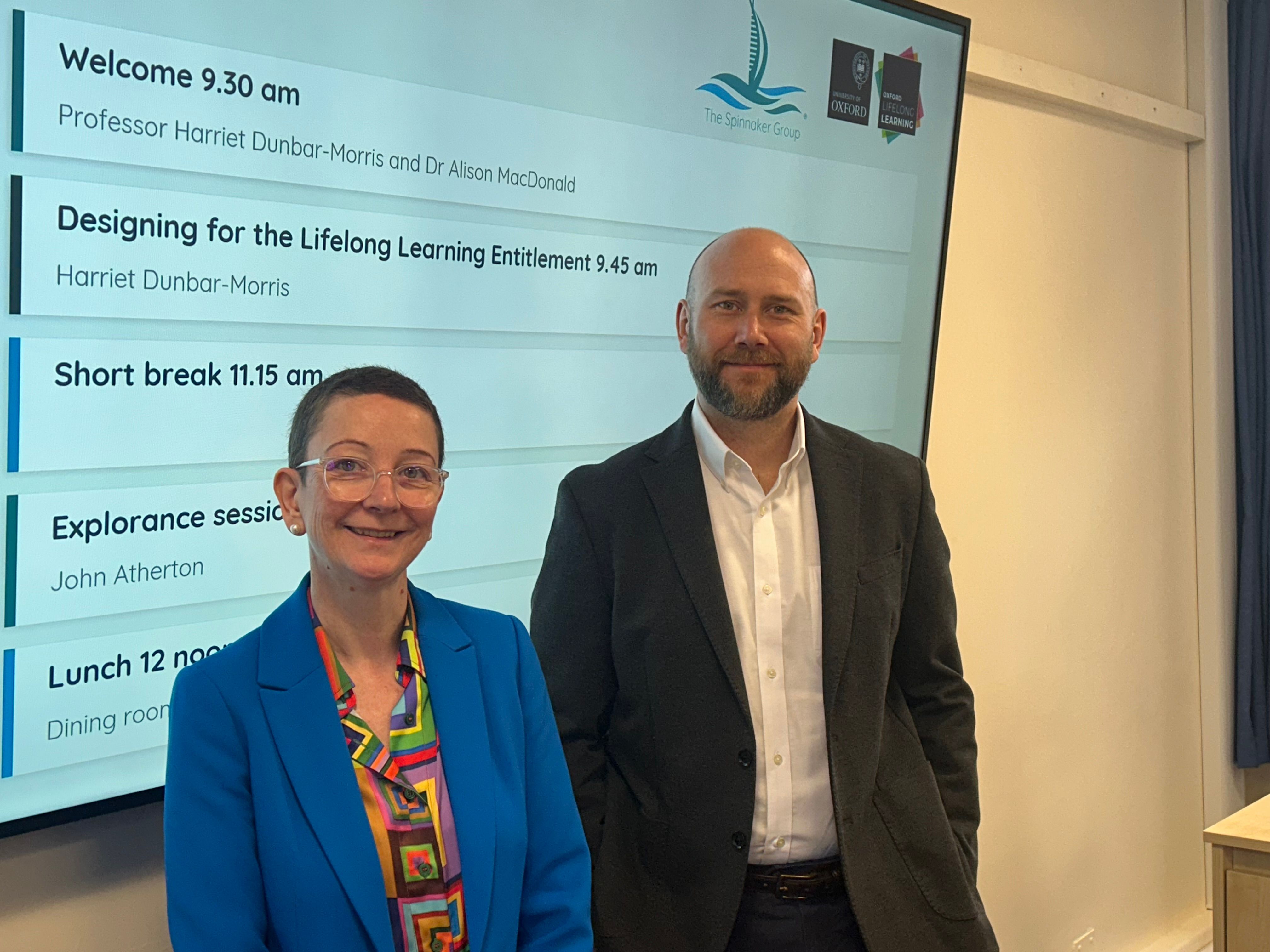
On 26-27th March, Oxford Lifelong Learning (where I am currently undertaking a Visiting Fellowship) hosted The Spinnaker Group's first meeting of 2026, kindly sponsored by Explorance.
Over 20 higher education representatives from the group, as well as Dr Alison MacDonald, Dr Toby Martin, and Fay Stevens from Oxford Lifelong Learning, explored best practice, ideas, and outlook on the Lifelong Learning Entitlement (LLE).
In an insightful two-day event, the meeting began with our dinner discussion, which included provocations between courses led by Professor Josie Fraser, Deputy Vice-Chancellor of The Open University.
The following day's sessions included Designing for the Lifelong Learning Entitlement; Modular Matters: Reimagining Quality for the Lifelong Learning Entitlement and Industrial Strategy; and Lifelong Learning in Context.
Here are five key topics from the meeting:
1. Redesigning Coherence, Not Adding Flexibility
Following welcomes from me and Dr Alison MacDonald, who highlighted the "transformative power of education", the need for "relevant courses in serving society as a whole", and Oxford Lifelong Learning's role, I chaired the Designing for the Lifelong Learning Entitlement session.
My opening gambit was that in designing for the LLE, academic standards are non-negotiable. We design for variability, not an idealised community. Evidence informs design, not anecdote. Lifelong learning is not adding flexibility. It is redesigning coherence. The meeting, throughout its duration, was anchored around testing that proposition against our own practice.
Colleagues were asked: _What assumptions about students are embedded in our design_s?
In groups they identified the most consequential (time, identity, confidence, continuity, and coherence) and explored what assumptions about lifelong learners appear most common across the sector.
Cultural assumptions were highlighted, particularly around expectations of communication styles (e.g. "digital natives"), participation in group work, and awareness of neurodiversity and social anxiety.
There was emphasis on fostering belonging and reducing loneliness, while recognising that the concept of "belonging" is complex - especially for international students - and requires a nuanced, non-universal approach.
Discussions on continuity of time noted that learners may be intrinsically motivated while balancing competing responsibilities, alongside assumptions about how students are expected to learn.
Meanwhile, time and access issues were closely linked to confidence and identity, with tensions identified by colleagues between supporting diverse learner identities and ensuring equitable access to course materials.
2. Challenging Common Assumptions
In the first of a series of mini-charette design sprints, colleagues were then asked to consider: What structural redesign would address this assumption?
They were encouraged to focus their discussion on one structural intervention - which might have been assessment architecture, module sequencing, transition points, tutoring models, or peer interaction structures - how academic rigour is protected, and risk and success factors.
Attendees were focused on designing for a learner who might:
- Work 20+ hours.
- Miss two weeks unexpectedly.
- Not be confident speaking publicly.
- Not see themselves represented.
There followed a cross-institutional exchange to stress-test these interventions: with one challenge and one strengthening suggestion, and to assess whether the interventions would work in their context. Key conversation points included, first, the need to clarify how lifelong learning is positioned and recognised across undergraduate and postgraduate taught provision, particularly in relation to accredited versus non-accredited pathways.
Colleagues also highlighted the importance of integrated student support models that balance digital-first systems with human interaction, noting the risk that even well-designed digital architectures may fail if not all students are effectively included or able to engage.
There was strong emphasis on strengthening the continuity and value of peer-based learning, especially through group work, with a focus on ensuring equitable contribution and maintaining academic rigour.
This raised questions on the role of formative versus summative assessment, and how students can be better prepared for collaborative work in the same structured way they are trained in individual academic skills.
Discussions explored the potential for more consistent approaches to group work, including the use of peer mentors to support learning, while recognising disciplinary differences and questioning whether "collaboration" may be a more appropriate framing than "group work".
In an overall wrap-up conversation about which assumptions about lifelong learners are most common across the sector, we surfaced how much of our design assumes uninterrupted participation (and being present).
If lifelong learning is to succeed, we need to redesign programmes for the lives people actually live. In addition, there was a united view in the room that the LLE has been mainly about funding so far, less focused on the academic side and ultimately making it work for students.
3. The Role Of Being, Belonging, Becoming: Our New Partnership With Explorance
We were delighted to share that Explorance is supporting The Spinnaker Group and our work on the LLE by piloting the Being, Belonging, Becoming (BBB) survey in designing the "Connected Student Journey" in the 2026-27 academic year.
This survey, developed and championed by colleagues and me at the University of Portsmouth, is designed to evaluate initiatives that improve student experience and capture areas like student-staff relationships, peer connections, learning experience, and personal development. Strong belonging is linked to better engagement, retention, and outcomes, as presented in Unveiling Student Experiences: The Being, Belonging, Becoming Survey.
Using Explorance's specialist survey platform among participating Spinnaker Group institutions, "Connected Student Journey" will test how students feel connected at every stage of their experience.
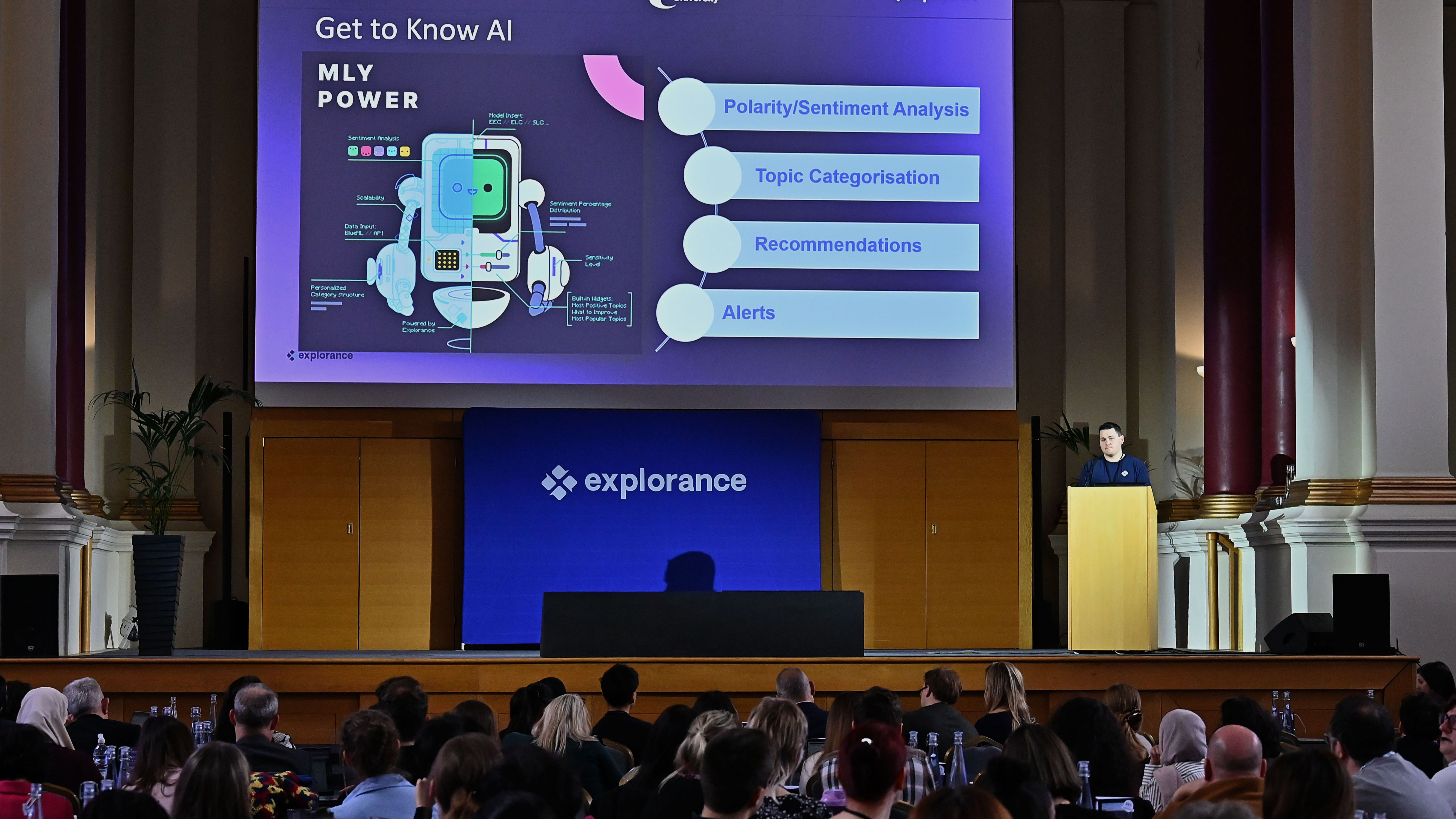
In a presentation from John Atherton titled Driving Student Success with Feedback Analytics, we also learned about Explorance's support for teaching effectiveness, learning excellence, student experience, and staff engagement, including case studies of its impact at Heriot-Watt University, Ulster University, and many other institutions.
John went on to facilitate a roundtable discussion on How do we ensure students feel connected at every stage (from pre-entry to alumni)?
Discussion prompts included using pre- and post-survey data to measure the impact of the transition, comparing first-year experience with final-year "becoming" outcomes, and bridging academic, social, and digital experiences. Feedback will be included in the next phase of our BBB work.
4. Inputting To Live Collaborative Research
We heard from Professor Paul Johnson (Dean of Academic Quality, University of Chester) and Professor Amanda Harvey (Dean of Education and Outcomes, St Mary's University, London) on their QAA Collaborative Enhancement Project: Modular Matters: Reimagining Quality for the Lifelong Learning Entitlement and Industrial Strategy.
The project aims to:
- Engage diverse stakeholders to capture perspectives on modular quality assurance in the context of the LLE and the Industrial Strategy.
- Identify and analyse existing good practice in modular provision across partner institutions and the wider sector.
- Develop and test practical solutions to assure and enhance the quality of modular learning, including inclusive assessment, portability, and regulatory frameworks that include learners with a diverse range of backgrounds.
- Co-create clear guidance and toolkits with stakeholders to support providers in delivering high-quality, inclusive, modular provision.
- Disseminate findings widely through reports, workshops, blogs, and online media to promote access.
Colleagues were asked to consider: What do you think the challenges are for providers in ensuring a high-quality learning and teaching experience for students on modular provision?
Key reflections included variability in student capability and engagement - particularly with some learners being less connected to their studies compared to those on non-modular provision. There were also concerns about how clearly students understand expectations and processes, especially around assessment.
Questions were raised regarding whether modules should carry formal accreditation, alongside broader structural challenges such as the lack of an effective credit transfer system between institutions.
They were then prompted: What do you see as the opportunities for providers of modular provision, and what would you need to have in place to benefit from them?
Participants identified several opportunities for providers of modular provision. These included offering "try before you buy" modules across institutions to allow learners to explore options before committing, expanding CPD offerings, and increasing the overall pool of learners.
There was particular interest in bridging Level 5 to Level 6 study and providing flexible pathways that accommodate students' changing schedules and financial pressures.
While the idea of students frequently moving between providers was explored, there was strong potential for extended, flexible study within a single institution. CPD opportunities were also highlighted for faculty seeking career development or promotion.
In a brief discussion on What are the things we are missing (stakeholders, questions, outputs, etc)?, a student "needs passport," and an online catalogue of modules across the country, subject to appropriate infrastructure, were mentioned.
5. Tackling The Unanswered Questions On Lifelong Learning
Having explored how programme design often assumes uninterrupted participation earlier in the meeting, we then moved into an open discussion on Lifelong Learning in Context.
Across the sector, however, we are simultaneously being asked to expand lifelong learning, stackable provision, and flexible pathways.
The question I asked colleagues to consider is not how we design individual modules or programmes, but whether our institutions and the sector are configured to support the kinds of redesign we discussed.
Specifically:
- What structural assumptions about learners are still dominant across UK higher education?
- What institutional barriers make redesign difficult?
- What would need to change, structurally or culturally, for lifelong learning to succeed?
Discussion followed, with prompts, on:
- The Structural Question: Are we trying to add lifelong learning to systems that were fundamentally designed for uninterrupted, full-time study?
- The Incentive Question: Do our current institutional incentives genuinely support lifelong learning, or do they quietly reinforce traditional participation models?
- The Ambition Question: Is lifelong learning currently being framed as an access initiative, when it may actually require a redesign of the academic model itself?
In response, attendees raised a range of practical and strategic issues regarding lifelong learning.
Structural and financial barriers were highlighted, including the lack of modular guidance for students and rules of engagement, the potential impact of modularisation on existing learners who form the bulk of institutional income, current credit systems that incentivise institutions to retain students for full degree programmes, and a lack of marketing of the LLE.
Participants also noted cultural and awareness challenges on modular approaches, such as parental understanding of alternatives to traditional full-time or part-time study. The creation of a National Lifelong Learning Framework to enable institutions to contribute modules regionally, rather than relying solely on individual institutional offerings, was proposed.
Closing Thoughts
In my view, lifelong learning is often framed as a question of access or flexibility. But what we discussed at the meeting suggests it is equally a question of institutional architecture.
Across the sector, we are enthusiastic about lifelong learning as an approach to providing inclusive education for the students that we see in our institutions, most of whom, while notionally full-time, are not studying full-time and see students as their main identity.
The question is whether our structures - institutional and sectoral - have yet to catch up with that ambition, and whether the LLE is solving the issue we see.
My concluding perspective is that if we are serious about lifelong learning it requires alignment: programme design, institutional systems, and sector frameworks. When these align, lifelong learning becomes possible. When they do not, it remains aspirational.
Many thanks to Oxford Lifelong Learning for hosting this event, and Explorance for their sponsorship, which enabled us to get down to some serious work around Lifelong Learning and the LLE.
Related Articles





Learn more about Explorance's products, solutions, and the company.

'%3e%3cpath%20d='M5.83968%2010.4004L7.09855%2015.7752L1.29959%2021.5843L1.23852%2021.642C1.21137%2021.6692%201.18762%2021.6997%201.16047%2021.7235C0.481112%2022.4372%200.0747675%2023.3674%200.0127211%2024.3508C-0.0493254%2025.3343%200.236888%2026.3082%200.821155%2027.1016C0.885626%2027.1865%200.950095%2027.2713%201.01796%2027.3493C1.0306%2027.3649%201.0442%2027.3796%201.05868%2027.3935C1.16422%2027.5192%201.27755%2027.6382%201.398%2027.7497L1.4455%2027.7939L1.67624%2028.0246L9.14125%2035.4896L20.0334%2024.6043L5.83968%2010.4004Z'%20fill='white'/%3e%3cpath%20d='M13.1078%2039.4493L9.78247%2042.761L15.1539%2041.5055L20.98%2047.3113L21.0411%2047.369L21.1225%2047.4504C21.8375%2048.1288%2022.7681%2048.5345%2023.7517%2048.5965C24.7354%2048.6585%2025.7096%2048.373%2026.5041%2047.7897C26.5889%2047.7253%2026.6737%2047.6608%2026.7518%2047.5929L26.7959%2047.5522C26.9233%2047.4401%2027.0434%2047.3199%2027.1556%2047.1925C27.1709%2047.1795%2027.1845%2047.1647%2027.1963%2047.1484L27.4304%2046.9211L34.8954%2039.4561L23.9999%2028.5605L13.1078%2039.4493Z'%20fill='white'/%3e%3cpath%20d='M34.8921%209.76194L38.2072%206.45019L32.8358%207.70228L27.0199%201.89315L26.9588%201.83207C26.9317%201.80492%2026.9045%201.78117%2026.8808%201.75403C26.1658%201.07561%2025.2352%200.669967%2024.2515%200.607946C23.2679%200.545924%2022.2937%200.831473%2021.4992%201.41471L21.2515%201.61491L21.204%201.65902C21.0833%201.7643%2020.9699%201.87767%2020.8646%201.99833L20.8239%202.04245L20.5932%202.2664L13.1282%209.73141L23.9999%2020.6473L34.8921%209.76194Z'%20fill='white'/%3e%3cpath%20d='M47.1789%2022.1067C47.1181%2022.0204%2047.0524%2021.9377%2046.9821%2021.859L46.9414%2021.8149C46.8301%2021.6867%2046.7099%2021.5665%2046.5817%2021.4552L46.5376%2021.4145L46.3069%2021.1838L38.8419%2013.7188L27.9531%2024.6041L38.8419%2035.4928L42.157%2038.8046L40.9015%2033.4332L46.7073%2027.624L46.7683%2027.5663L46.8464%2027.4815C47.5267%2026.769%2047.9337%2025.8392%2047.9958%2024.856C48.0579%2023.8727%2047.771%2022.8992%2047.1857%2022.1067H47.1789Z'%20fill='%230050C1'/%3e%3c/g%3e%3cdefs%3e%3cclipPath%20id='clip0_6641_12689'%3e%3crect%20width='48'%20height='47.9966'%20fill='white'%20transform='translate(0%200.603516)'/%3e%3c/clipPath%3e%3c/defs%3e%3c/svg%3e)