Explorance World 2026 Recap: 4 Key Themes From the Conference
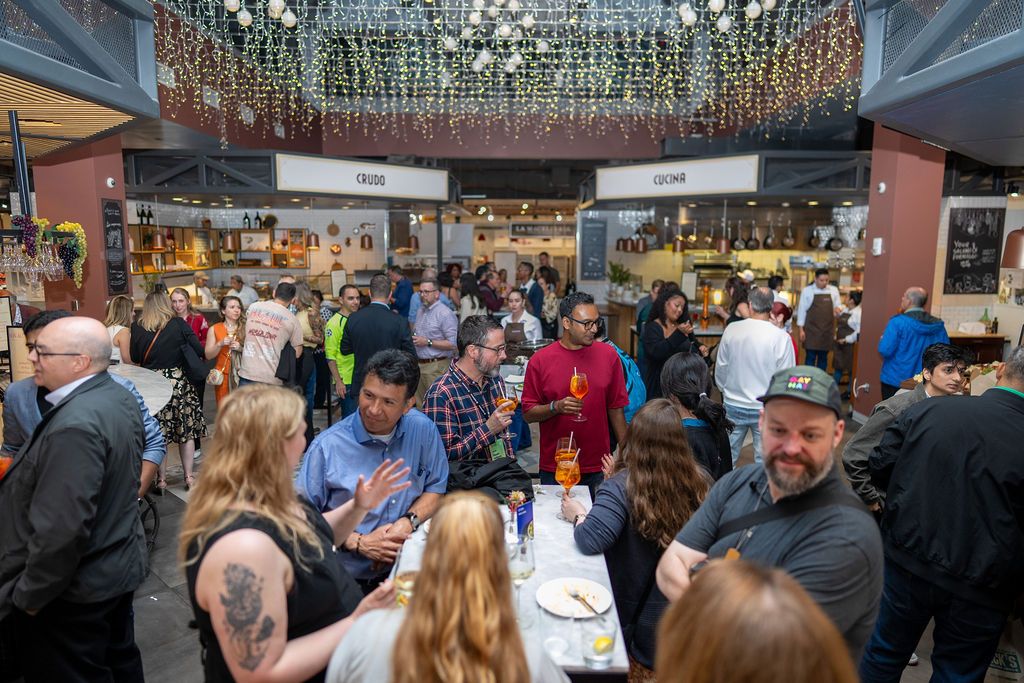

Explorance World is dedicated exclusively to feedback analytics and its strategic place within organizations, ranging from higher education institutions to globally recognized businesses and non-profits.
The event brings together HR leaders, L&D professionals, and administrators from universities, colleges, and other schools who use the Explorance platform to connect student and employee listening to actionable outcomes.
The 2026 edition of the conference was held from June 17-19 at the George Sherman Union at Boston University, with pre-conference workshops on June 16. The three-day program included keynote sessions, customer-led breakouts, and a dedicated technology zone.
Explorance World welcomed speakers and attendees from many well-known organizations and higher education institutions, including (but not limited to):
- Allegion
- Cornell University
- Cox Automotive
- Dalhousie University
- Eastman
- GE Aerospace
- Harvard
- Heartland Dental
- Heriot-Watt University
- McGill University
- Michigan State University
- Ohio State University
- Princeton
- Stellenbosch University
- Tufts University
- United Rentals
- University of Oxford
- University of St. Gallen
- University of Texas at Austin
- Zayed University
All the informative, engaging sessions converged to underscore a critical takeaway: Organizations need to rethink what feedback means. How to use it, how to collect it, and, in many cases, whether they need to collect it at all.
This blog recaps the most important themes from an unforgettable edition of this industry-leading conference.
1. Silence Is Data: Rethinking What Better Listening Means
Organizations that define listening as strictly survey response rates and nothing more are measuring the wrong variable. That was the opening argument at Explorance World 2026, and it spanned three days of sessions across both the higher education and enterprise tracks.
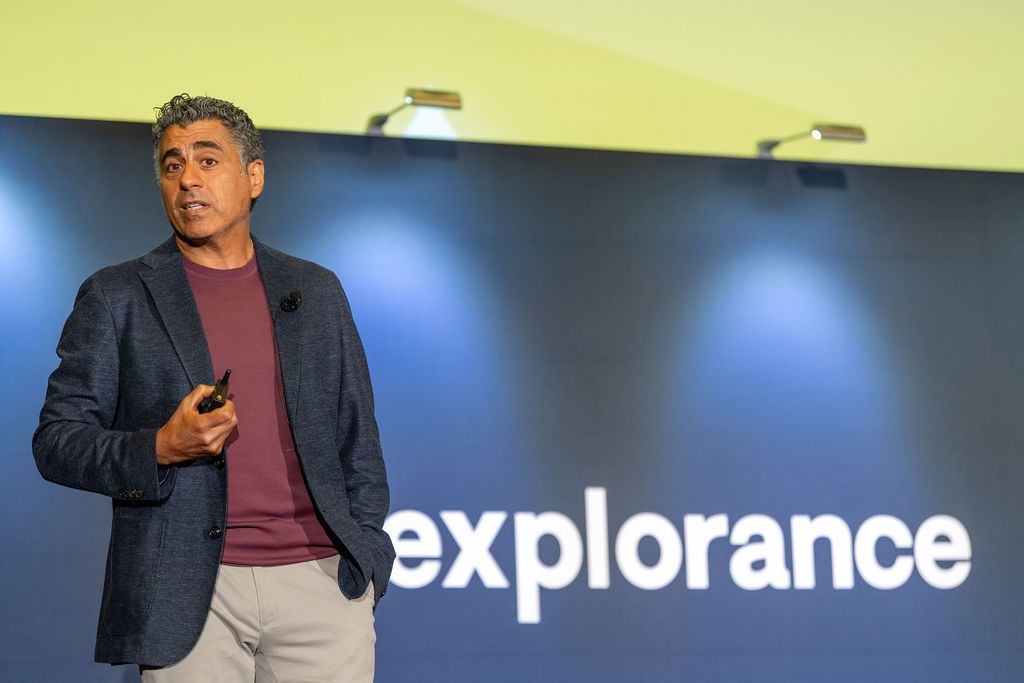
Samer Saab's opening keynote framed the problem directly. Declining response signals a broken environment, one that can be truly addressed by better, more holistic listening. If not, people stop answering when they do not trust what happens to their input.
"We've reached a pivotal moment where the traditional survey-first approach is no longer sufficient to truly understand the voices of students and employees," he said. "We must build organizations that are truly wired to know, not just wired to measure. This means meeting people where they already are, understanding their experiences through the signals they're already providing, and only then asking the questions that matter most.
"The future feedback isn't about asking more, it's about listening better," he added.
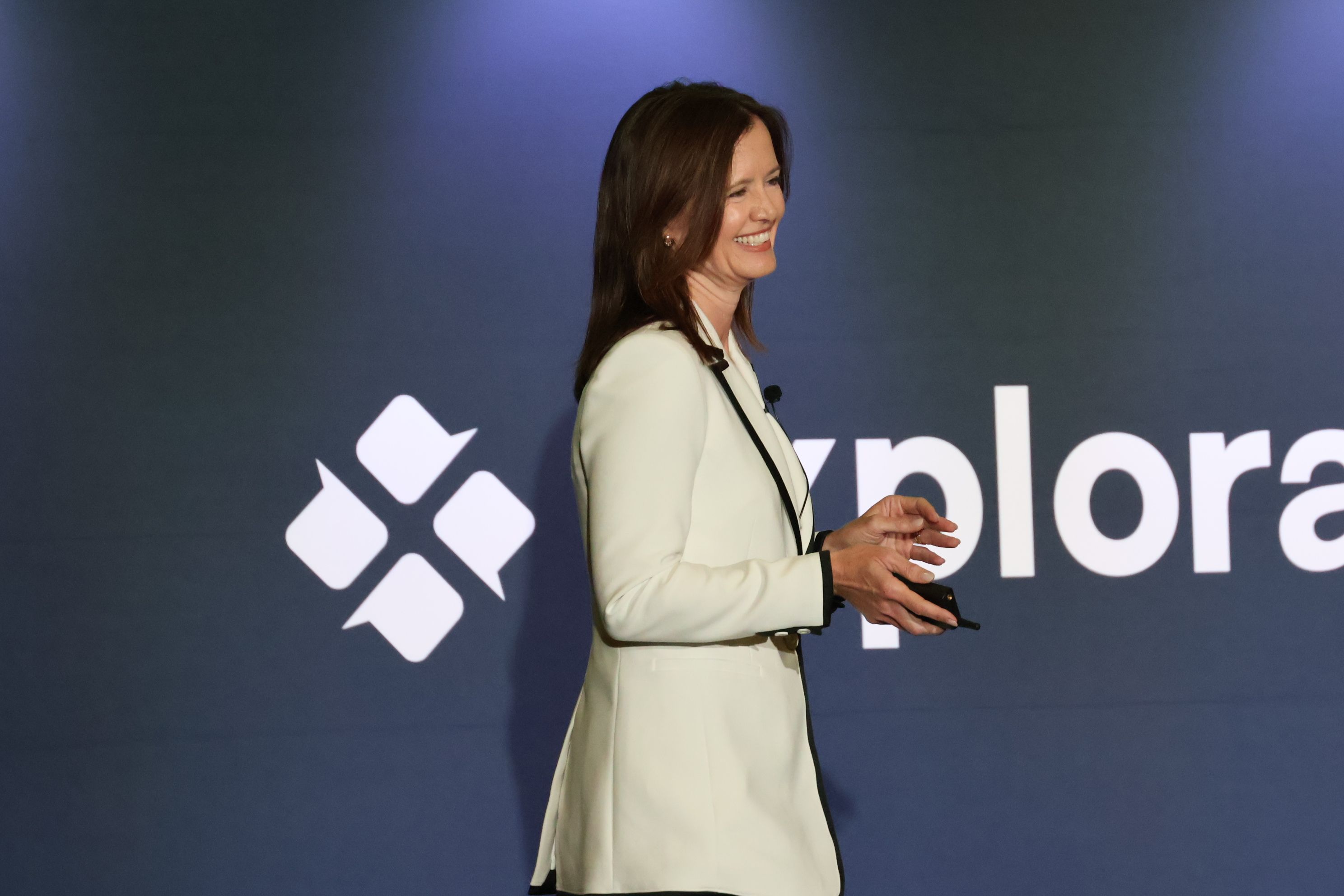
Shawn Overcast's closing keynote reinforced that argument from a different angle. As organizations collect more feedback than ever, the challenge is no longer whether leaders and administrators have access to enough data.
It is whether people feel heard when they give it.
"Without our ability to truly listen, to empathize, to respond, and to take action, we can create more distance, which is the opposite of what we're trying to do through our listening practices," she said.
"What if we consider listening not as a transactional administrative process, but as more of a deep human experience that shapes our trust, shapes engagement, shapes how we learn, and shapes how we perform within our organizations?"
Those questions were some of many that informed and guided conversations throughout the conference.
2: AI Is Normal Technology: Treat It That Way
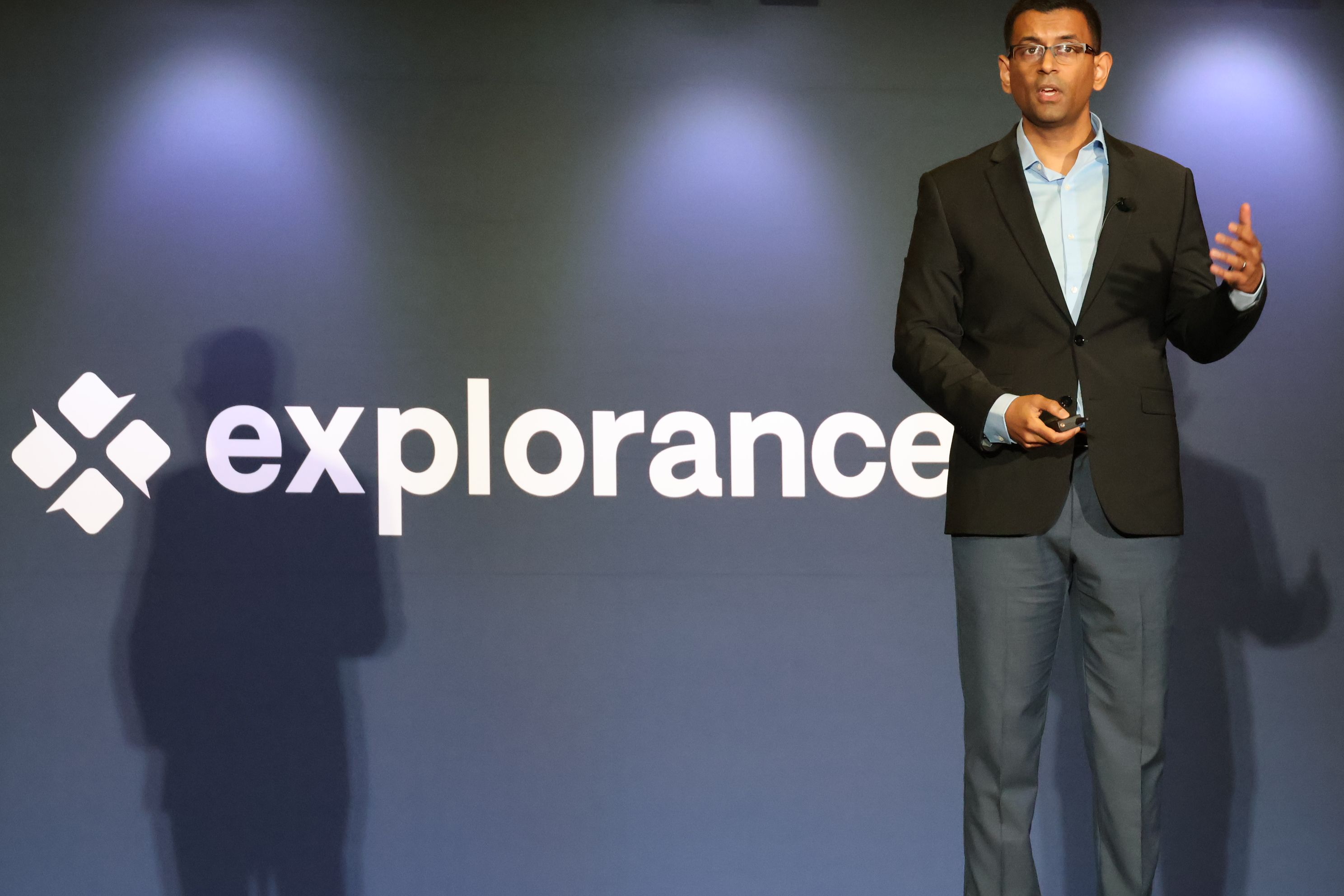
Most organizations approach AI as either an urgent threat or an imminent breakthrough. Arvind Narayanan, Professor of Computer Science at Princeton University, opened Day 2 of Explorance World 2026 by rejecting both positions. His argument was direct: AI is a general-purpose technology. It follows the same adoption patterns as earlier technology shifts.
Narayanan drew on his co-authored essay of the same name to make a specific distinction. AI methods, AI applications, and AI adoption are three separate things. They happen at different speeds. Technical capability improvement does not mean organizational adoption follows. The productivity benefits of electricity took nearly 40 years to materialize after the first central generating station was built.
Narayanan argued that AI will follow the same pattern. "The speed at which AI capabilities might improve is not the speed at which it is transforming work," he explained. "We have much more agency to shape the latter, no matter what the tech companies do and what they predict."
The data supports that argument. Across 163,638 employees tracked over three years, time spent in AI tools increased eightfold. No activity category decreased after adoption. AI amplified work. It did not replace it.
Most organizations have adoption. Very few have built the operating discipline to direct it. Narayanan's argument is that leaders who treat AI as categorically different from prior technology shifts will make worse decisions than those who do not.
"Over a period of 18 months to 2 years, during a time when capability is, in fact, going up dramatically, exactly as the companies claim, from something like 25% to 80%, reliability had only gone up by something like 5 to 10 percentage points," he added.
"The innovations required to productively take advantage of AI in the workplace are not going to come from the AI companies. That's up to all of us."
3. From Measurement to Intelligence: The Evolution of Learning Analytics
Reporting learning activity is no longer sufficient to justify L&D's place in business decisions.
Michael Rochelle, Chief Strategy Officer at Brandon Hall Group, drew that line directly in his Day 3 keynote. Organizations that cannot show how learning moves revenue, productivity, or customer outcomes will face cuts. The question is not whether L&D matters. It is whether L&D can prove it.
Steve Lange, General Manager of Metrics That Matter, outlined how the next 18-24 months of MTM development will make this possible. The roadmap moves from reporting toward prediction. AI-powered insight generation, conversational analytics, and portfolio optimization are the core directions. The goal is to help learning leaders anticipate risk and guide investment before problems surface, not after.
Lange reframed the conversation around what L&D teams should be measuring in the first place: "Learning is not the outcome. Performance is. Learning is the vehicle that helps folks perform."
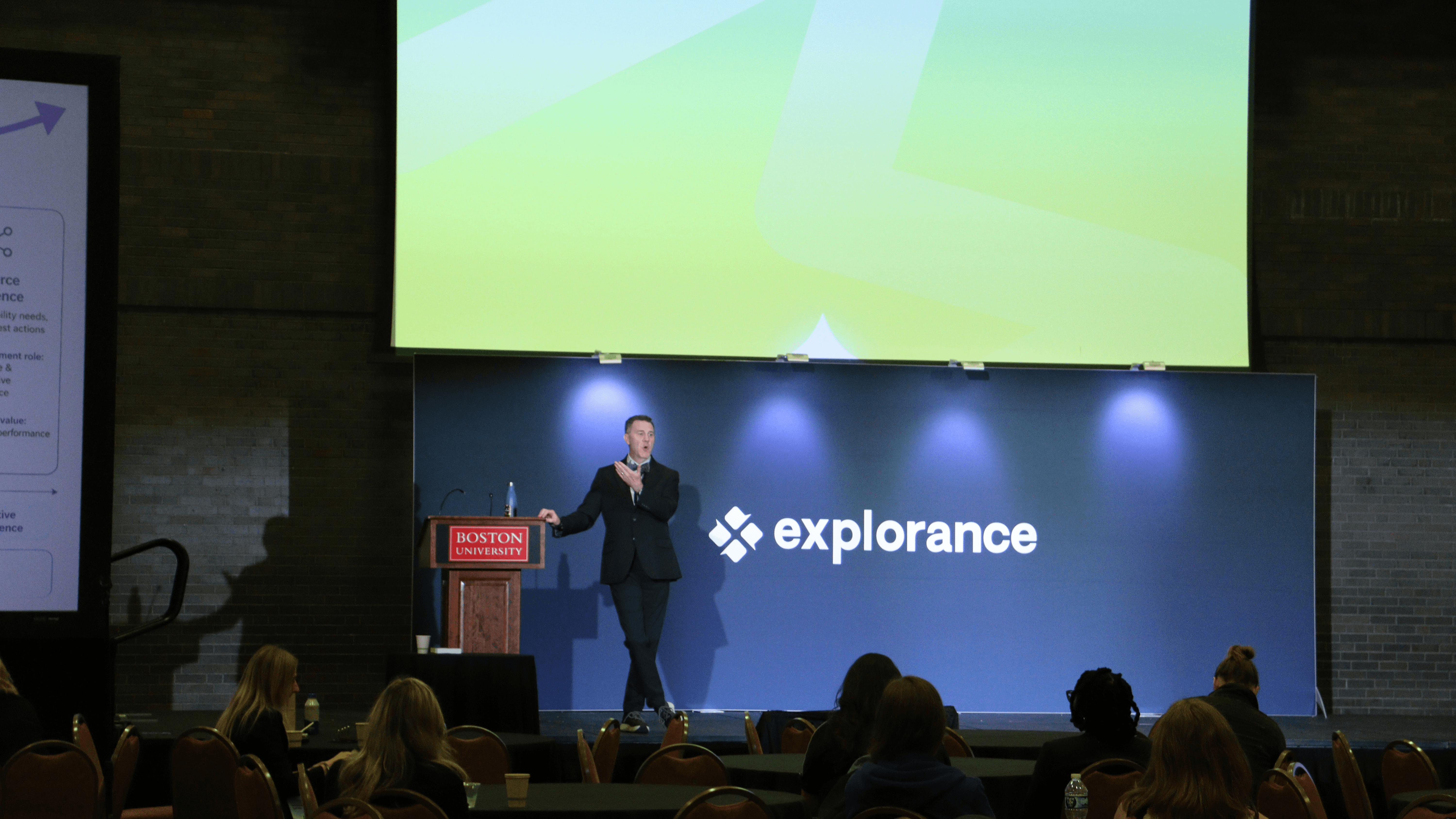
He acknowledged that most organizations already have the data they need. The problem is knowing what to do with it. "Most organizations today have more data than they know what to do with. The real challenge now is not in collecting information, it's what do we do with it?"
The MTM roadmap addresses that gap by shifting from dashboards to decisions. But Lang emphasized that technology alone will not build credibility with stakeholders: "That's where decisions come from, folks. That's where trust comes from, that's where reliability comes from. It comes from conversations. Not the reports, not the PowerPoint presentations, not the dashboards."
The message aligned with the broader conference theme. Measurement supports the journey. It does not replace the work of connecting learning to business outcomes through direct dialogue with leaders.
Customer sessions across Day 2 and Day 3 showed this shift is already underway:
- GE Aerospace built MTM into daily, weekly, and monthly operating rhythms where dashboards trigger action at the point of problem detection.
- Eastman used scrap learning analysis to retire a low-application platform and redesign a flagship leadership program after a vendor change.
- Cox Automotive connected learning data to retention, promotion rates, and lateral movement to show senior leaders performance data instead of completion rates.
- Heartland Dental standardized enterprise-wide measurement through shared templates, manager-level reporting, and clear intake processes.
4. Holistic Teaching Evaluation Is Both Overdue and Achievable
Student ratings alone do not provide a valid basis for evaluating teaching. That argument is not new. What is new is the evidence behind it and the tools to act on it. The keynote panel on Building Holistic Teaching Evaluations drew on research from more than 70 departments across three universities. D.L. Fulmer Greenhoot, Noah Finkelstein, Gabriela Weaver, Ann Austin, and Emily Miller presented a shared framework built on principles of validity, fairness, and multiple sources of evidence.
Finkelstein framed the stakes directly: "We believe that evaluation is a core mechanism for externalizing our value and purpose, and rewarding the kind of work that we can and do engage in."
The panel's framework addresses a structural problem in how institutions gather evidence. As Fulmer Greenhoot explained: "We know that any single source, if it comes from humans, will have some degree of bias, and using multiple convergent forms of evidence is one way to limit that."
Austin emphasized that implementing holistic evaluation requires more than new technology: "This is not just a checkbox activity. It's really something that has to do with the whole culture, with the processes, with the structures, with all the people of our colleges and universities."
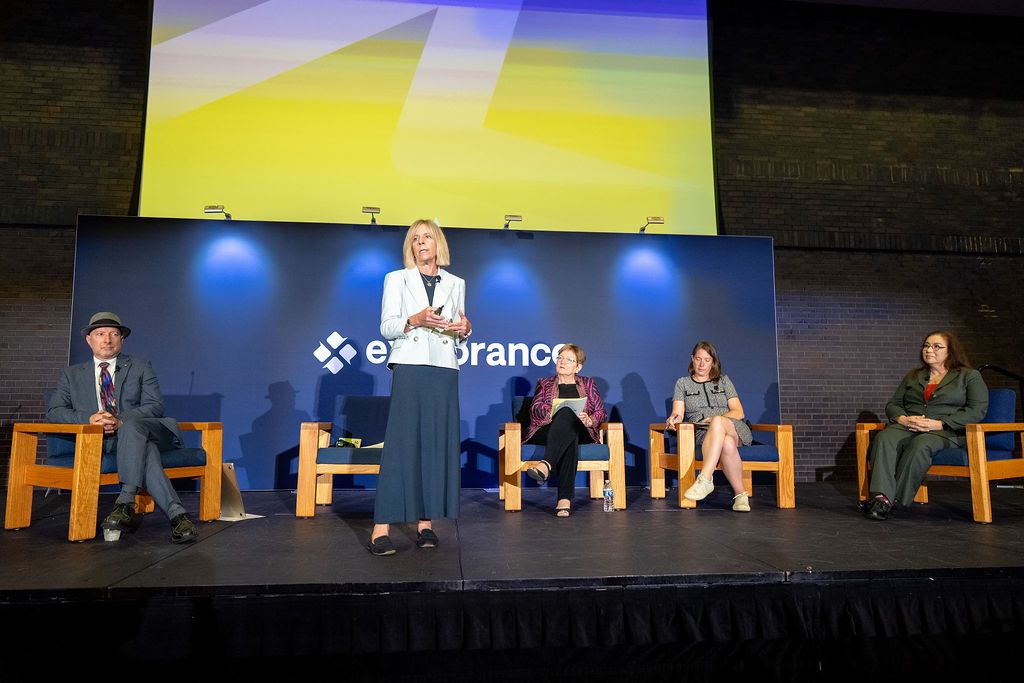
The shift from single-source to multi-source evaluation is already producing results. One department chair told the research team: "I find this process liberating," because transparent criteria eliminated arguments about where ratings should fall.
Customer sessions across the main program showed what that framework looks like in practice:
- Michigan State University: Nate Clason described how Blue automates the collection of student feedback, peer observations, self-evaluations, and course artifact reviews within a single system. The result is an Evidence of Teaching Quality report that draws on multiple data sources rather than a single survey score. Clason acknowledged the practical barrier: decades of reliance on student ratings have created institutional habits that take deliberate effort to change.
- American University in Cairo: AUC integrated student feedback, peer review, and faculty self-reflection into a unified Blue framework. Student response rates rose to approximately 60%. Faculty received formative feedback during the semester rather than after it. Leaders gained data for mentorship and development decisions rather than performance scores in isolation.
- University of Notre Dame: Adrea Hernandez and Brandy Rypma shared a candid account of the change management challenge behind every technology decision. Notre Dame migrated from a homegrown system that had served its holistic evaluation policies for more than a decade. One year into implementation, stakeholders miss familiar workflows, new processes surface unexpected questions, and sustaining adoption requires as much planning as the rollout itself.
- University of St. Gallen: The institution built a structured quality-monitoring cycle for courses that fall below a defined threshold. When a course scores below 2.5 on a five-point scale, administrators initiate a dialogue with the instructor, document the cause, classify the issue, and track planned measures. The system shifts the institution from isolated course-level reactions to a pattern-based view of quality across programs.
To sign up for all Explorance World 2027 updates, including when tickets will go on sale at Super Early Bird pricing, subscribe via the event webpage.
Related Articles






Learn more about Explorance's products, solutions, and the company.

'%3e%3cpath%20d='M5.83968%2010.4004L7.09855%2015.7752L1.29959%2021.5843L1.23852%2021.642C1.21137%2021.6692%201.18762%2021.6997%201.16047%2021.7235C0.481112%2022.4372%200.0747675%2023.3674%200.0127211%2024.3508C-0.0493254%2025.3343%200.236888%2026.3082%200.821155%2027.1016C0.885626%2027.1865%200.950095%2027.2713%201.01796%2027.3493C1.0306%2027.3649%201.0442%2027.3796%201.05868%2027.3935C1.16422%2027.5192%201.27755%2027.6382%201.398%2027.7497L1.4455%2027.7939L1.67624%2028.0246L9.14125%2035.4896L20.0334%2024.6043L5.83968%2010.4004Z'%20fill='white'/%3e%3cpath%20d='M13.1078%2039.4493L9.78247%2042.761L15.1539%2041.5055L20.98%2047.3113L21.0411%2047.369L21.1225%2047.4504C21.8375%2048.1288%2022.7681%2048.5345%2023.7517%2048.5965C24.7354%2048.6585%2025.7096%2048.373%2026.5041%2047.7897C26.5889%2047.7253%2026.6737%2047.6608%2026.7518%2047.5929L26.7959%2047.5522C26.9233%2047.4401%2027.0434%2047.3199%2027.1556%2047.1925C27.1709%2047.1795%2027.1845%2047.1647%2027.1963%2047.1484L27.4304%2046.9211L34.8954%2039.4561L23.9999%2028.5605L13.1078%2039.4493Z'%20fill='white'/%3e%3cpath%20d='M34.8921%209.76194L38.2072%206.45019L32.8358%207.70228L27.0199%201.89315L26.9588%201.83207C26.9317%201.80492%2026.9045%201.78117%2026.8808%201.75403C26.1658%201.07561%2025.2352%200.669967%2024.2515%200.607946C23.2679%200.545924%2022.2937%200.831473%2021.4992%201.41471L21.2515%201.61491L21.204%201.65902C21.0833%201.7643%2020.9699%201.87767%2020.8646%201.99833L20.8239%202.04245L20.5932%202.2664L13.1282%209.73141L23.9999%2020.6473L34.8921%209.76194Z'%20fill='white'/%3e%3cpath%20d='M47.1789%2022.1067C47.1181%2022.0204%2047.0524%2021.9377%2046.9821%2021.859L46.9414%2021.8149C46.8301%2021.6867%2046.7099%2021.5665%2046.5817%2021.4552L46.5376%2021.4145L46.3069%2021.1838L38.8419%2013.7188L27.9531%2024.6041L38.8419%2035.4928L42.157%2038.8046L40.9015%2033.4332L46.7073%2027.624L46.7683%2027.5663L46.8464%2027.4815C47.5267%2026.769%2047.9337%2025.8392%2047.9958%2024.856C48.0579%2023.8727%2047.771%2022.8992%2047.1857%2022.1067H47.1789Z'%20fill='%230050C1'/%3e%3c/g%3e%3cdefs%3e%3cclipPath%20id='clip0_6641_12689'%3e%3crect%20width='48'%20height='47.9966'%20fill='white'%20transform='translate(0%200.603516)'/%3e%3c/clipPath%3e%3c/defs%3e%3c/svg%3e)