37,000 Students, One Question: How the University of Newcastle Transformed Qualitative Feedback with Explorance MLY
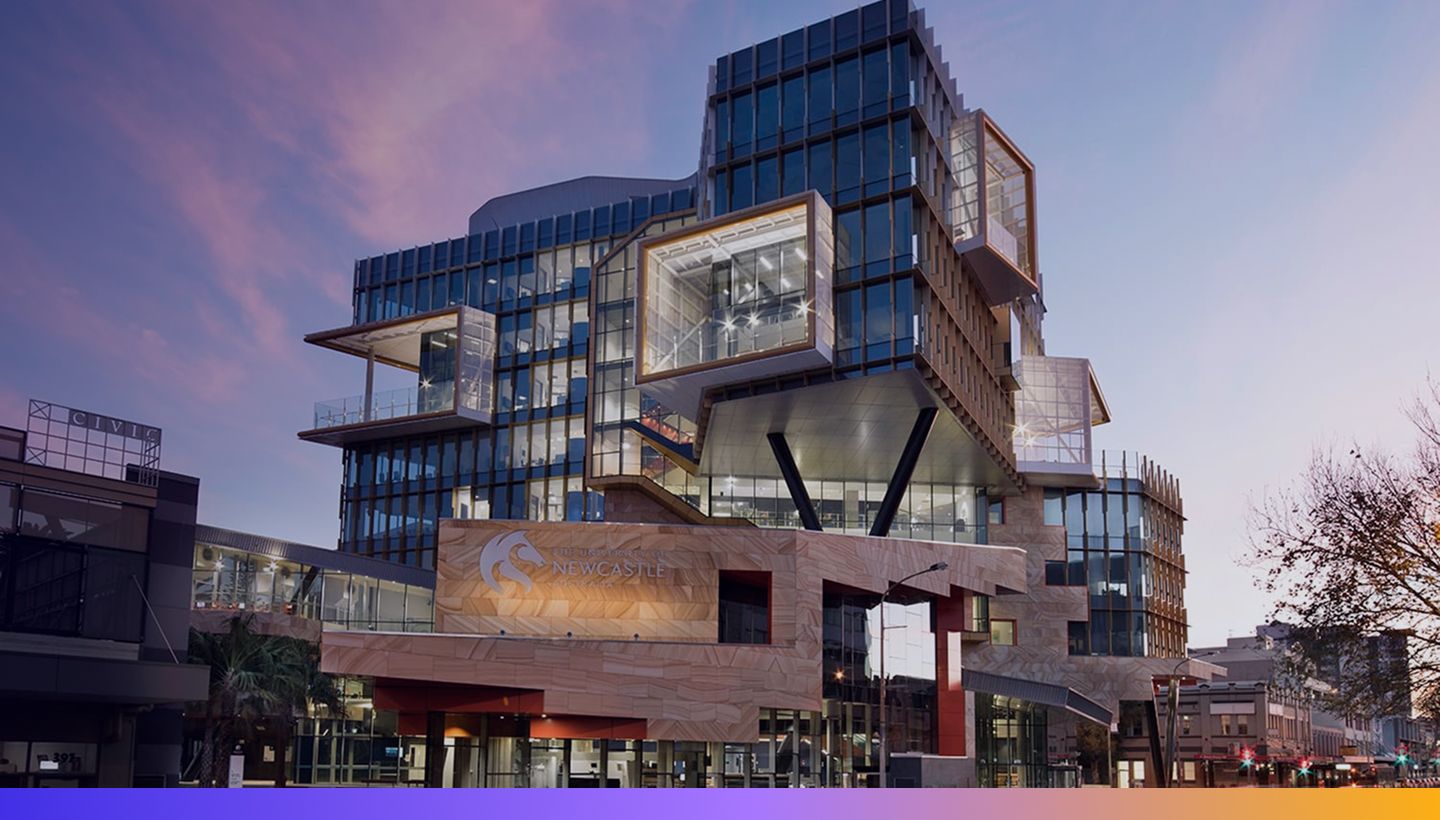

About the University of Newcastle, Australia
The University of Newcastle, with a student population of over 37,000, is a leading institution known for its inclusive environment and strong focus on equity and social justice. With campuses in both urban and regional areas, it offers a wide range of undergraduate, postgraduate, and research programs. The University is home to students from more than 115 countries and is recognized for its research-driven approach, industry alignment, and real-world impact.
The Challenge: From Engagement to Overload as Manual Analysis Falls Short
In 2020, the University of Newcastle reimagined its student feedback approach by replacing 30 quantitative questions with a single qualitative feedback question. This shift was designed to elevate the student voice and collect more meaningful, qualitative insights.
The result was a significant increase in engagement, with response rates doubling and previously undetected issues coming to light. However, this success introduced a new challenge as the university faced a rapidly growing volume of qualitative data without a scalable and repeatable analysis method.
An internal solution was implemented to flag inappropriate content using a dictionary-based system but proved insufficient in capturing the evolving language of student feedback. The university quickly recognized the need for a more robust and intelligent approach to support its evolving feedback culture.
The Solution: Leveraging AI to Elevate Feedback Analysis
Initially, staff accepted that analyzing comments would be a time-consuming process. Outsourcing was also considered but ultimately dismissed due to strategic misalignment and ethical concerns. During this period of exploration, the University discovered Explorance MLY, an AI-powered qualitative analysis solution.
MLY emerged as the ideal solution. Unlike generic text analytics tools, MLY enabled the University to analyze entire comments in the context of the student experience, moving beyond simple keyword matching. The platform’s education-specific models could detect key themes, sentiments, and actionable recommendations, even those that might be missed by human reviewers. It also offered a deep understanding of higher education language, covering both academic and co-curricular experiences.
“The pre-trained models were a key difference for us,” explained Meagan Morrissey, Manager, Student and Staff Insights. “Other off-the-shelf text analytics tools weren’t trained using higher education comments. With MLY, we’re speaking the same language.”
Outcome: From Manual Burden to Automated Insight and Action
With MLY, the university can quickly identify emerging issues and prioritize comments that require escalation. Ultimately, MLY has provided an efficient, accurate, and repeatable process for qualitative feedback analysis.
The integration of machine learning mitigated bias and naivety, reducing human error in the process. Consequently, MLY has become a key component of the University of Newcastle’s feedback analytics toolbox. It offers the university a straightforward, reproducible, and defensible method for consistently analyzing qualitative feedback over time.
“We were reading comments most of the year, and now MLY is processing that workload in minutes,” Meagan continued. Her team leverages this extra time to take their feedback culture to the next level. This includes developing strategies to prevent psychological harm and continuing to reinforce their feedback culture for both students and staff.
Related Case Studies




Learn more about Explorance's products, solutions, and the company.

'%3e%3cpath%20d='M5.83968%2010.4004L7.09855%2015.7752L1.29959%2021.5843L1.23852%2021.642C1.21137%2021.6692%201.18762%2021.6997%201.16047%2021.7235C0.481112%2022.4372%200.0747675%2023.3674%200.0127211%2024.3508C-0.0493254%2025.3343%200.236888%2026.3082%200.821155%2027.1016C0.885626%2027.1865%200.950095%2027.2713%201.01796%2027.3493C1.0306%2027.3649%201.0442%2027.3796%201.05868%2027.3935C1.16422%2027.5192%201.27755%2027.6382%201.398%2027.7497L1.4455%2027.7939L1.67624%2028.0246L9.14125%2035.4896L20.0334%2024.6043L5.83968%2010.4004Z'%20fill='white'/%3e%3cpath%20d='M13.1078%2039.4493L9.78247%2042.761L15.1539%2041.5055L20.98%2047.3113L21.0411%2047.369L21.1225%2047.4504C21.8375%2048.1288%2022.7681%2048.5345%2023.7517%2048.5965C24.7354%2048.6585%2025.7096%2048.373%2026.5041%2047.7897C26.5889%2047.7253%2026.6737%2047.6608%2026.7518%2047.5929L26.7959%2047.5522C26.9233%2047.4401%2027.0434%2047.3199%2027.1556%2047.1925C27.1709%2047.1795%2027.1845%2047.1647%2027.1963%2047.1484L27.4304%2046.9211L34.8954%2039.4561L23.9999%2028.5605L13.1078%2039.4493Z'%20fill='white'/%3e%3cpath%20d='M34.8921%209.76194L38.2072%206.45019L32.8358%207.70228L27.0199%201.89315L26.9588%201.83207C26.9317%201.80492%2026.9045%201.78117%2026.8808%201.75403C26.1658%201.07561%2025.2352%200.669967%2024.2515%200.607946C23.2679%200.545924%2022.2937%200.831473%2021.4992%201.41471L21.2515%201.61491L21.204%201.65902C21.0833%201.7643%2020.9699%201.87767%2020.8646%201.99833L20.8239%202.04245L20.5932%202.2664L13.1282%209.73141L23.9999%2020.6473L34.8921%209.76194Z'%20fill='white'/%3e%3cpath%20d='M47.1789%2022.1067C47.1181%2022.0204%2047.0524%2021.9377%2046.9821%2021.859L46.9414%2021.8149C46.8301%2021.6867%2046.7099%2021.5665%2046.5817%2021.4552L46.5376%2021.4145L46.3069%2021.1838L38.8419%2013.7188L27.9531%2024.6041L38.8419%2035.4928L42.157%2038.8046L40.9015%2033.4332L46.7073%2027.624L46.7683%2027.5663L46.8464%2027.4815C47.5267%2026.769%2047.9337%2025.8392%2047.9958%2024.856C48.0579%2023.8727%2047.771%2022.8992%2047.1857%2022.1067H47.1789Z'%20fill='%230050C1'/%3e%3c/g%3e%3cdefs%3e%3cclipPath%20id='clip0_6641_12689'%3e%3crect%20width='48'%20height='47.9966'%20fill='white'%20transform='translate(0%200.603516)'/%3e%3c/clipPath%3e%3c/defs%3e%3c/svg%3e)