Amplifying Voices, Inspiring Progress: Highlights from the Explorance Europe Summit 2025


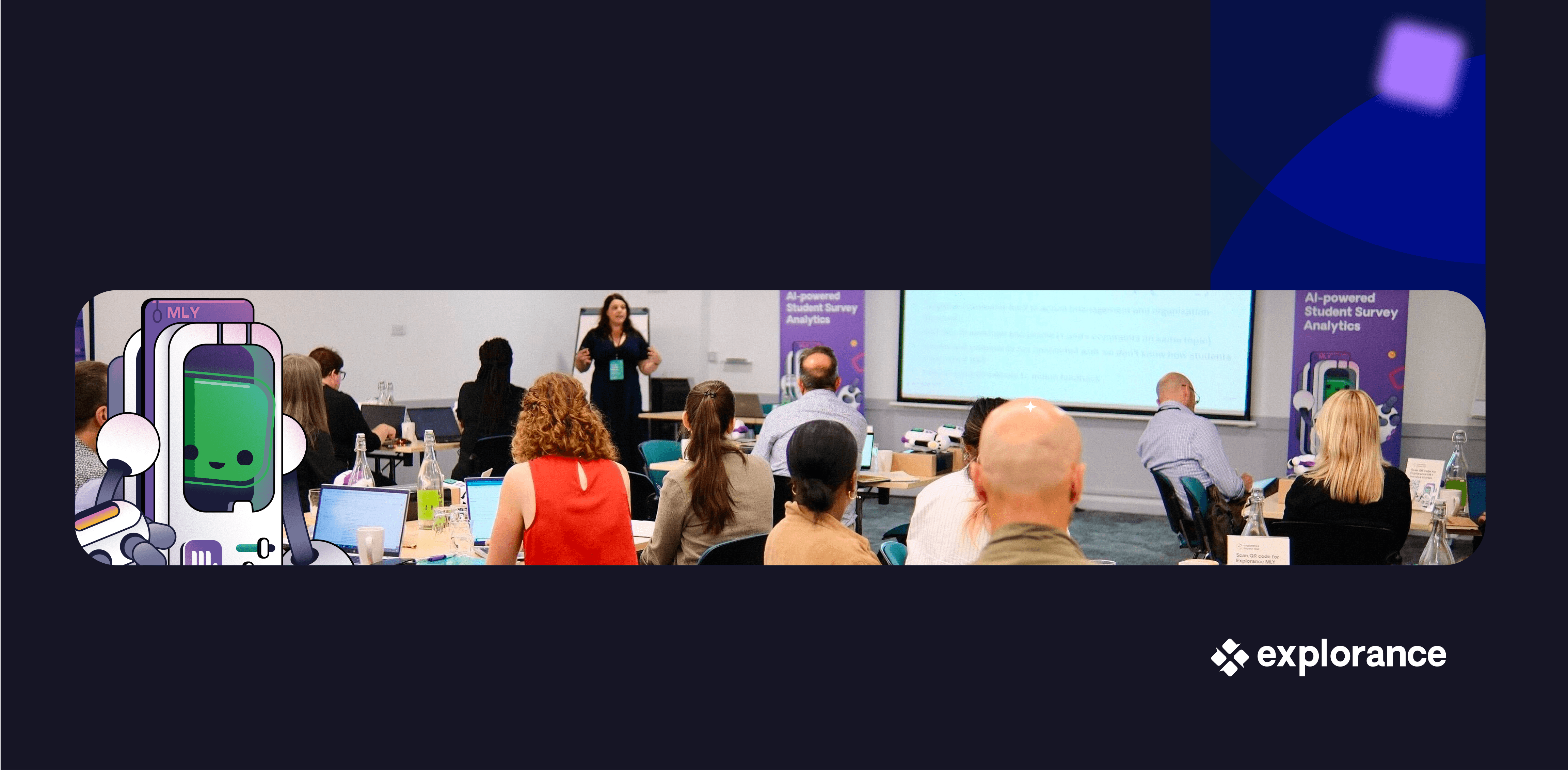
The Explorance Europe Summit 2025, themed Amplifying Voices. Inspiring Progress: Elevating Student Success through Innovation in Higher Education was one to remember.
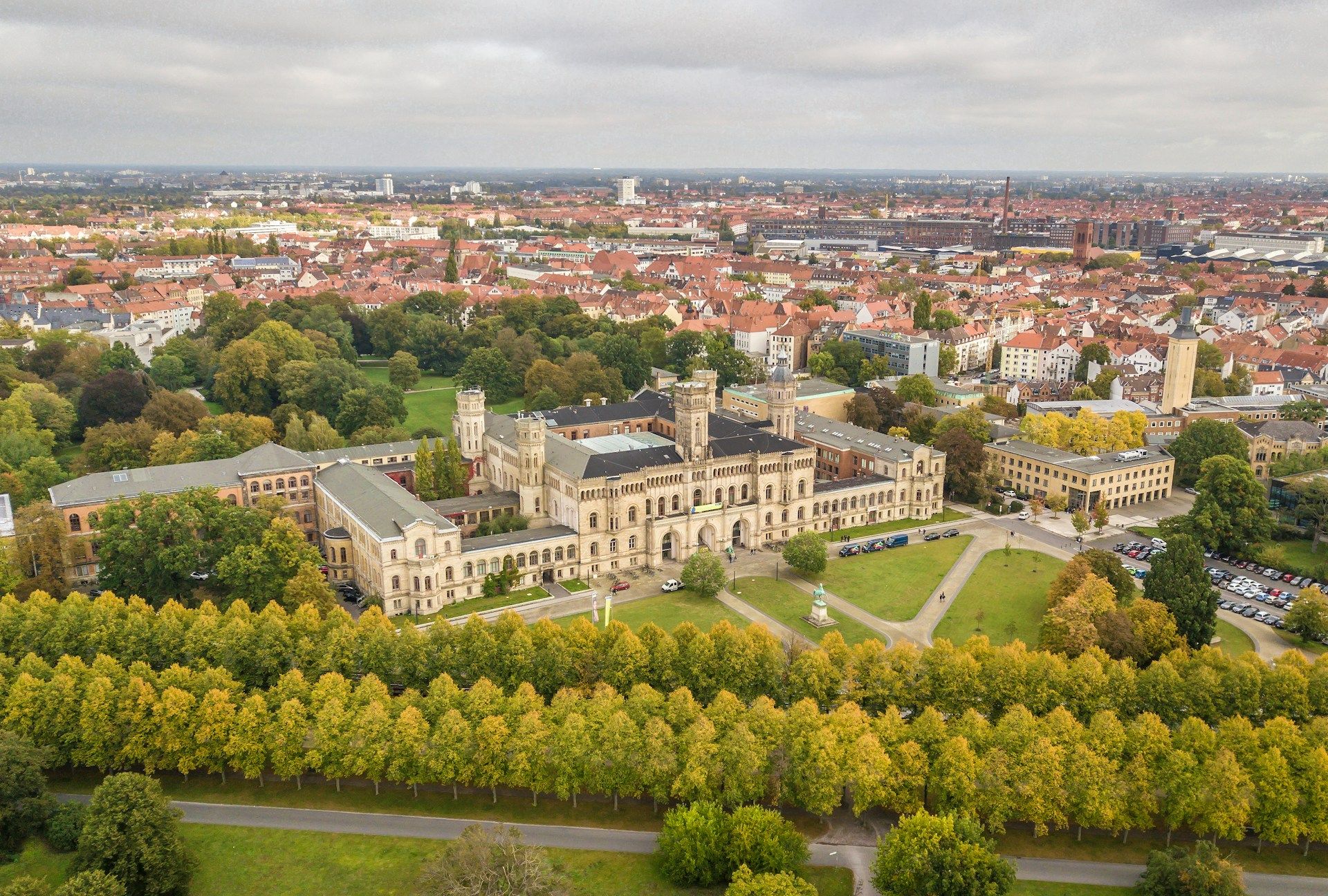
Hosted at The National Robotarium, an awe-inspiring venue at Heriot-Watt University, the event brought together student voice leaders from universities across the UK and Europe to share insights, strategies, and innovations that turn feedback into meaningful action.
Alongside a compelling programme, including three keynotes, six customer presentations, and a panel discussion, over 60 delegates enjoyed a personal introduction to Ameca, billed as 'the world's most advanced' humanoid robot.
They also had a stunning visit to Edinburgh Castle, where they experienced the Castle of Light, an after-dark, after-hours event featuring beautiful light and projection shows, interactive installations, and themed trails through the castle grounds.
Here's a round-up of some of the conference's most important takeaways:
1. Defining and Achieving the Ideal Feedback Experience
In the session titled MLY and Beyond: Unifying the Feedback Experience, hosts Heriot-Watt University shared how they are redefining the way Explorance MLY supports institutional insight. MLY now anchors a fully unified feedback ecosystem, integrated with Power BI to deliver a seamless, dynamic feedback experience, and "combining platforms is enhancing engagement, unlocking strategic value, and delivering meaningful impact".
"It is all about value for money in the current climate, and Explorance has been fantastic in supporting our different needs," said Kirsty Scanlan, Director of Strategic Planning, Performance & Projects. "We were blown away with MLY from the outset. It is all about making a difference, and we can use it in many different ways."
Rosemary Thornhill, Senior Data Analyst and Team Lead, added: "MLY gives us insights that drive decision-making. We are seeing the story behind the data and how that changes over time."
2. Rapid Return on Investment and Institutional Impact
Ulster University detailed its impressive early outcomes after adopting Explorance Blue and MLY this year.
Ursula McTaggart, Senior Lecturer in Higher Education Practice, said Ulster was previously reliant on an in-house survey system that had remained unchanged for over 15 years, and faced persistent challenges: low engagement (7-8%) and invisible qualitative comments.
Since implementing Explorance and launching an internal promotion campaign to staff and students, results have transformed dramatically:
- A pilot survey in the Faculty of Computing, Engineering and the Built Environment in March saw a 33.39% engagement rate from over 6,000 students - compared with 9.03% using the old system.
- That same survey produced 9,992 comments "in minutes", converted into 5,515 sentiment topics and 3,403 recommendations.
- End-of-module surveys across all four faculties, involving 11,697 invites, later achieved a 22.96% engagement rate, up from 6.5% in the 2023-24 academic year.
- Mid-module surveys undertaken for the Faculty of Computing, Engineering, and the Built Environment in semester one of this academic year delivered a 28.92% engagement rate, with more than half of the 50 modules exceeding 50% participation.
- To date, 87,642 open-ended comments have been analysed in MLY, directly informing Learning Enhancement action plans around group work, assessment, and feedback.
In short, remarkable progress in a very short time.
3. Using Blue to Develop Leaders and 360 Reporting
London Business School is using Blue for psychometric assessments and 360 leadership evaluations to support leadership development within its Executive Education programmes.
Technology Manager Oluwaseun Olofin highlighted three elements that have worked particularly well:
- Tailored Questionnaires: Design team creates customised questionnaires aligned with programme objectives for accurate assessments.
- Valuable Coaching Reports: Coaches use detailed reports as valuable tools for guiding development conversations effectively.
- Streamlined Client Journey: Clients receive timely and relevant information, making their journey smoother and more efficient.
Delegates learned how this adoption has enhanced the participant experience, increased coach engagement, and reduced costs compared with the school's previous approach.
A presentation from Liverpool John Moores University (the first UK university to adopt Blue) titled Survey-Driven Support: Using 360 Reporting to Enhance Student Transitions further demonstrated the platform's versatility.
Their use of a pre-arrival survey has helped advance several key goals:
- Provide programme teams with information at the start of the academic year, to enhance induction and transition.
- Encourage students to share their voice through surveys and feedback mechanisms (including achieving a 56% response rate with a representative sample of the final eligible cohort).
- Foster early engagement with university support services.
4. High-Level Praise For Explorance MLY
In his keynote titled The Boring Revolution: How AI is Changing Higher Education in Ways You Might Not Even Notice, we heard from Rob Nelson, a writer and educator who spent 18 years managing academic technology projects at the University of Pennsylvania, including the implementation of enterprise systems for course evaluations and course management.
Pointing to its role in innovation, Rob said he had been talking to Explorance about machine learning since 2007 as part of his "paper-based to data-based processes mission" at Pennsylvania. He emphasised the "trust" he places in Explorance to "help institutions navigate the risks of AI" and described MLY as a "purpose-built model" for higher education needs.
Day Two featured a keynote from Professor Steve McLaughlin, Vice-Principal and Provost at Heriot-Watt University. Speaking on portfolio reviews, resource modelling, and curriculum design, as tools for a sustainable future, he highlighted the imperative "to adopt a systematic, data-driven approach" - noting MLY as a key component in that strategy.
5. Reimagining Education: Leadership, Learning, and Next Generation of Students
A standout session at the conference brought together Professor Claire Hamshire (now Pro Vice Chancellor Education at Oxford Brookes University), Kirsty (Heriot-Watt), and Ursula (Ulster), with moderation by Kristin Huber (Evaluation and Quality Expert, University of St. Gallen). The panel explored the evolving landscape of student voice, leadership, and technology in higher education.
Student Voice in 2030
The panel agreed that by 2030, student voice must be embedded in ethical, purposeful practice. Institutions have a responsibility to listen, act when appropriate, and ensure diverse perspectives - including quieter voices - are reflected. Co-design with students and involving them directly in data interpretation are essential steps.
Working Through Financial Uncertainty
Despite financial pressures, universities must remain values-driven in their approaches. Clear communication, stronger collaboration with students, and investing in change processes can help institutions to work more efficiently. Data-driven decision-making was also emphasised as a key enabler of meaningful transformation.
Transformational Leadership
Outstanding leadership, the panel noted, is rooted in listening and learning. Context matters, as does knowing and acknowledging institutional complexity and historical voices, but compassion and empathy for students are crucial. Effective leaders connect people across a university and foster a culture that elevates student perspectives.
AI in Education
Students want clarity on the responsible use of AI, while staff need more support and guidance. Ensuring assessment validity remains a priority. The panel acknowledged tensions around 'good' versus 'bad' AI (MLY, once again, was highlighted as a 'good' example) and noted that machine learning tools can improve efficiency. Involving students in AI policy conversations will also help to ensure balanced, inclusive decisions.
Final Takeaways from the Explorance Europe Summit 2025
Above all, students want to feel valued. Even when their requests cannot be fully met, transparency, genuine partnership, and a willingness to share power help build trust and strengthen the educational experience.
Power of The Explorance Community
What makes the Explorance community special, and in many ways unique, is the relationships that are built and partnerships that are formed.
The University of St. Gallen and Copenhagen Business School discussed their in-person collaboration and how this professional exchange has sparked new thinking about how to represent and respond to student feedback meaningfully.
Collaboration was the name of the game, as Bath Spa University, Kingston University, and the University of Worcester combined for their joint presentation, 'From Data to Dialogue: University Approaches to Student Voice Dashboards'.
Finally, the Explorance Europe community in Edinburgh came together to recognise the achievements of the following institutions/teams at its Customer Excellence Awards 2025.
- Passion: Kingston University (Rebecca Hampsted, Emily Davies).
- Optimism: Bath Spa University (Rachel Garman, Emilia Dunmore).
- Leadership: University of St. Gallen (Kristin Huber).
- Partnership: Heriot-Watt University (Kirsty Scanlan, Rosemary Thornhill, Richard Cooper).
- Vision: The University of Law (Annie Wheeler).
Download the session slides and view the photos from the Europe Summit 2025.
Registrations are now open for the Student Voices in Higher Education Conference 2026.
Phil is a specialist PR, communications, and stakeholder engagement consultant with 22 years' experience in both in-house and consultancy roles. He support universities, multi-academy trusts and schools, as well as commercial organizations targeting the education sector, to support their profile, reputation and business development objectives.
Related Articles




Learn more about Explorance's products, solutions, and the company.

'%3e%3cpath%20d='M5.83968%2010.4004L7.09855%2015.7752L1.29959%2021.5843L1.23852%2021.642C1.21137%2021.6692%201.18762%2021.6997%201.16047%2021.7235C0.481112%2022.4372%200.0747675%2023.3674%200.0127211%2024.3508C-0.0493254%2025.3343%200.236888%2026.3082%200.821155%2027.1016C0.885626%2027.1865%200.950095%2027.2713%201.01796%2027.3493C1.0306%2027.3649%201.0442%2027.3796%201.05868%2027.3935C1.16422%2027.5192%201.27755%2027.6382%201.398%2027.7497L1.4455%2027.7939L1.67624%2028.0246L9.14125%2035.4896L20.0334%2024.6043L5.83968%2010.4004Z'%20fill='white'/%3e%3cpath%20d='M13.1078%2039.4493L9.78247%2042.761L15.1539%2041.5055L20.98%2047.3113L21.0411%2047.369L21.1225%2047.4504C21.8375%2048.1288%2022.7681%2048.5345%2023.7517%2048.5965C24.7354%2048.6585%2025.7096%2048.373%2026.5041%2047.7897C26.5889%2047.7253%2026.6737%2047.6608%2026.7518%2047.5929L26.7959%2047.5522C26.9233%2047.4401%2027.0434%2047.3199%2027.1556%2047.1925C27.1709%2047.1795%2027.1845%2047.1647%2027.1963%2047.1484L27.4304%2046.9211L34.8954%2039.4561L23.9999%2028.5605L13.1078%2039.4493Z'%20fill='white'/%3e%3cpath%20d='M34.8921%209.76194L38.2072%206.45019L32.8358%207.70228L27.0199%201.89315L26.9588%201.83207C26.9317%201.80492%2026.9045%201.78117%2026.8808%201.75403C26.1658%201.07561%2025.2352%200.669967%2024.2515%200.607946C23.2679%200.545924%2022.2937%200.831473%2021.4992%201.41471L21.2515%201.61491L21.204%201.65902C21.0833%201.7643%2020.9699%201.87767%2020.8646%201.99833L20.8239%202.04245L20.5932%202.2664L13.1282%209.73141L23.9999%2020.6473L34.8921%209.76194Z'%20fill='white'/%3e%3cpath%20d='M47.1789%2022.1067C47.1181%2022.0204%2047.0524%2021.9377%2046.9821%2021.859L46.9414%2021.8149C46.8301%2021.6867%2046.7099%2021.5665%2046.5817%2021.4552L46.5376%2021.4145L46.3069%2021.1838L38.8419%2013.7188L27.9531%2024.6041L38.8419%2035.4928L42.157%2038.8046L40.9015%2033.4332L46.7073%2027.624L46.7683%2027.5663L46.8464%2027.4815C47.5267%2026.769%2047.9337%2025.8392%2047.9958%2024.856C48.0579%2023.8727%2047.771%2022.8992%2047.1857%2022.1067H47.1789Z'%20fill='%230050C1'/%3e%3c/g%3e%3cdefs%3e%3cclipPath%20id='clip0_6641_12689'%3e%3crect%20width='48'%20height='47.9966'%20fill='white'%20transform='translate(0%200.603516)'/%3e%3c/clipPath%3e%3c/defs%3e%3c/svg%3e)